
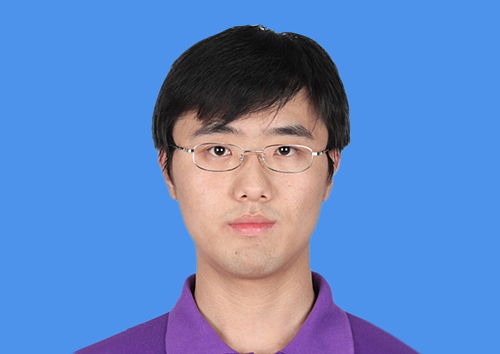
Liu Junwei
Assistant Professor
<h4>Research interest</h4>
Prof. Liu has a very broad interest in condensed matter physics and quantum physics, varying from the traditional phenomena like ferroelectricity to the exotic topological phases like quantum spin Hall insulators. Currently, his research focuses on two parts: 1) explore new phase of quantum matter including both symmetry-breaking phases and topological phases, and their novel properties, material realizations, experimental signatures and potential applications; 2) combination of advanced machine learning techniques and quantum physics, especially the combination of machine learning techniques and quantum Monte Carlo simulations and all optical neural networks.
<h4>Biography</h4>
Prof. Liu obtained his Bachelor of Science from Xi'an Jiaotong University in 2009 and PhD from Tsinghua University in 2014. After spending three years for his postdoctoral research work in MIT, Prof. Liu then joined the Department of Physics in HKUST in 2017. With his collaborators, Prof. Liu has made the following progresses in the past several years, and he even received the award “National Natural Science Foundation of China Excellent Young Scientist 2020”. His full publication list can be found in <a href="https://scholar.google.com/citations?user=J3TYKHQAAAAJ&hl=en" target="_blank" rel="noopener">Google Scholar</a>.
<strong><em>Dissipationless topological materials</em></strong> – Prof. Liu’s team proposed a new topological phase, 2D topological crystalline insulator, and predicted its existence in thin films of SnTe-type semiconductors [<strong><em>Nature Materials</em></strong><em> 13, 178-183 (2014)</em>]. The team predicted that quantum spin Hall insulators (QSHIs) could be realized in WTe2-type transition metal dichalcogenides of 1T’ structure [<strong><em>Science</em></strong> <em>346, 1344 (2014)</em>], and proposed the topological field-effect transistor (TFET) [<em>MIT news:</em> <a href="https://news.mit.edu/2014/2-d-quantum-materials-for-nanoelectronics-1120" target="_blank" rel="noopener"><em>New 2-D quantum materials for nanoelectronics</em></a>]. The low energy consumption and high operation speed make TFET competitive for realizing low dissipation quantum electronics and spintronics. The predictions have been extensively demonstrated in experiments.
<strong><em>Atomic-thin ferroelectricity</em></strong> – Prof. Liu’s team discovered that (001) SnTe thin films can sustain in-plane ferroelectricity with thickness down to the one-unit cell (UC) limit [<em>Science 353, 274 (2016)</em>]. Moreover, 2- to 4-UC SnTe films show robust ferroelectricity at even room temperature. The team designed the first ferroelectric tunneling random access memory (FETRAM) using in-plane polarization and filed a patent [<em>US patent</em>: 9959920 B2]. FETRAM can realize simultaneous non-volatile storage and non-destructive reading and have better performance than other proposed devices [<em>MIT news</em>: <a href="https://news.mit.edu/2016/charging-random-access-memory-0714" target="_blank" rel="noopener"><em>Charging up random access memory</em></a>].
<strong><em>Self-learning Monte Carlo method</em></strong> – By combining the effective models in Physics and machine learning techniques, Prof. Liu’s team proposed the self-learning Monte Carlo (SLMC) method [<em>Physical Review B 95, 041101 (2017)</em>], which is very powerful and can be applied in both classic and quantum systems to accelerate the calculations. Especially, in fermionic systems, SLMC can even dramatically reduce the computational complexity, and achieve 10<sup>3</sup> speedup for the double exchange model [<em>Physical Review B 95, 241104 (2017)</em>].
<strong><em>Fully-functioned all-optical neural network </em></strong>-- Prof. Liu’s team proposed and built the fully-functioned all-optical neural networks (AONN) with both linear and nonlinear activation functions by using pure optics elements [<strong><em>Optica</em></strong><em> 6, 1132 (2019)</em>] and demonstrated its scalability [<em>arXiv:2102.09722 (2021)</em>]. The implementation of nonlinear activation function in the team’s work makes it possible to realize the real deep all-optical neural networks. The AONN can realize the intrinsic infinite parallel calculations at the speed of light. As “a <em>first-of-its-kind</em> multilayer all-optical artificial neural network”, the team’s work has been featured as a news release by the Optical Society OSA with a title of <em>“</em><a href="https://www.osa.org/en-us/about_osa/newsroom/news_releases/2019/optica_neural_network/?utm_source=miragenews&utm_medium=miragenews&utm_campaign=news" target="_blank" rel="noopener"><em>Researchers Demonstrate All-Optical Neural Network for Deep Learning</em></a>”.
<strong><em>C-paired spin-valley locking</em></strong> – Prof. Liu’s team proposed a new type of spin-valley locking, which directly connects the spin/valley space with the real space through a crystalline symmetry, and hence both spin and valley can be accessed by simply breaking the corresponding crystal symmetry to realize a multifunctional antiferromagnetic material. Typically, one can use a strain field to induce a large net valley polarization/magnetization and use a charge current to generate a large noncollinear spin current [<em>Nature Communications, accepted (2021)</em>]. The team’s findings provide unprecedented opportunities to integrate both static and dynamic controls of spin and valley with nonvolatile information storage in a single material, which is highly desirable for versatile fundamental research and device applications. Moreover, antiferromagnetic materials possess the desired advantages of higher-speed operation and lower-energy consumption [<em>Nature Physics</em> <em>14, 200 (2018)</em>].
- Phone: 2358 7971
- Email: liuj at ust.hk

Peng Rui
Postdoctoral Fellow
<h4>Research Inerests:</h4>
<ul>
<li>2D Valleytronic Materials</li>
<li>Interlayer Interactions</li>
</ul>
<h4>Education:</h4>
09/2017 – 07/2022 <strong>Shandong University</strong>
PhD’s Degree in Theoretical Physics
09/2013 – 07/2017 <strong>Shandong Normal University
</strong>Bachelor’s Degree in Physics
<h4>Introduction:</h4>
Dr. Peng Rui joined in Liu’s group in August, 2022. Before that she earned her graduate degree from ShanDong University. She is now a Postdoctoral Fellow in Liu’s group. Peng Rui’s interests range from 2D Valleytronic Materials and Interlayer Interactions. Besides she likes reading and dancing in daily life. You can connect her in Room 4423, or mail with pengrui at ust.hk.
- Email: pengrui at ust.hk

Wang Ziyu
PhD Student- Email: zwanggj at connect.ust.hk

Fu Xizhi
PhD Student
<h4>Research Inerests:</h4>
Tight-binding Model
Algorithm
<h4>Education:</h4>
09/2022 – <strong>The Hong Kong University of Science and Technology
</strong>PhD’s Degree in Theoretical Physics
09/2018 – 07/2022<strong> Wuhan Universiy,</strong>
Bachelor’s Degree in Physics
<h4>Introduction:</h4>
Mr. Fu obtained his BA from the Wuhan University in 2022. He is currently pursuing his PhD under the supervision of Prof. Junwei LIU. He is now focusing on the algorithm in physics include anoumolous effects and TB Model.
- Email: xfuam at connect.ust.hk
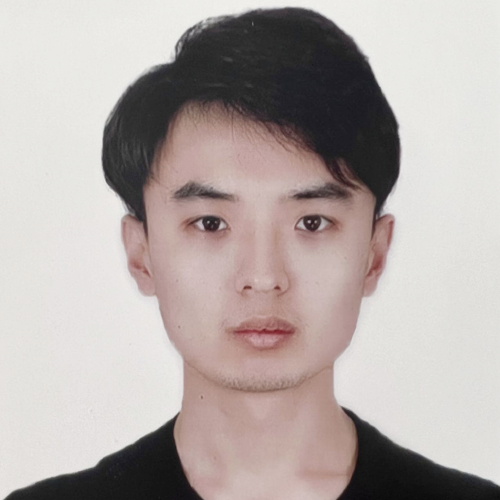
Zhang Lu
PhD Student- Email: lzhangdh at connect.ust.hk
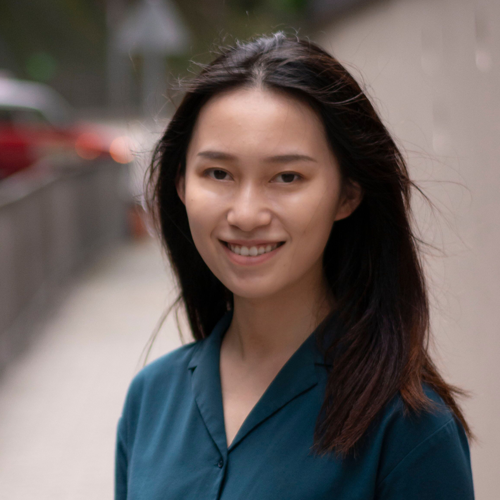
HU Mengli
PhD Student
<h4>Research Inerests:</h4>
First Principle Calculation
Topological Materials
<h4>Education:</h4>
09/2018 – <strong>The Hong Kong University of Science and Technology
</strong>PhD’s Degree in Theoretical Physics
09/2014 – 09/2018 <strong>Central South University
</strong>Bachelor’s Degree in Theoretical Physics
<h4>Introduction:</h4>
Ms. Mengli joined in Liu’s group in August, 2022. Before that she earned her bachelor degree from Central South University. She is now a PhD Student in Liu’s group.
- Email: mhuah at connect.ust.hk

Zhao Yujun
PhD Student
<h4>Research Inerests:</h4>
<ul>
<li>Machine learning in Condensed Matter Physics</li>
<li>Topological insulator</li>
<li>Topological superconductors</li>
</ul>
<h4>Education:</h4>
09/2018 – <strong>The Hong Kong University of Science and Technology
</strong>PhD’s Degree in Theoretical Physics
09/2017 – 09/2018 <strong>Hong Kong Baptist University
</strong>MSc in Green Technology (Energy)
09/2011 – 09/2015 <strong>Southern University of Science and Technology
</strong>BSc in Physics
<h4>Introduction:</h4>
Mr. Zhao Yujun joined in Liu’s group in August, 2018. Before that he earned his bachelor degree from SUST and MSc from HKBU. He is now a PhD Student in Liu’s group. Yujun’s interests range from Machine learning to topological superconductor, you can connect him with yzhaocs at connect.ust.hk.
- Email: yzhaocs at connect.ust.hk

HUANG Zhenqiao
PhD Student
<h4>Research Inerests:</h4>
<ul>
<li>First-principles Calculations</li>
<li>Magnetic Materials</li>
</ul>
<h4>Education:</h4>
09/2019 – <strong>The Hong Kong University of Science and Technology</strong>
PhD’s Degree in Theoretical Physics
09/2015 – 07/2019 <strong>Southern University of Science and Technology</strong>
Bachelor’s Degree in Physics
<h4>Introduction:</h4>
Mr. Huang obtained his BA from the Southern University of Science and Technology in 2019. He is currently pursuing his PhD under the supervision of Prof. Junwei LIU. He is now focusing on the magnetic material related numerical calculation.
- Email: zhuangci at connect.ust.hk
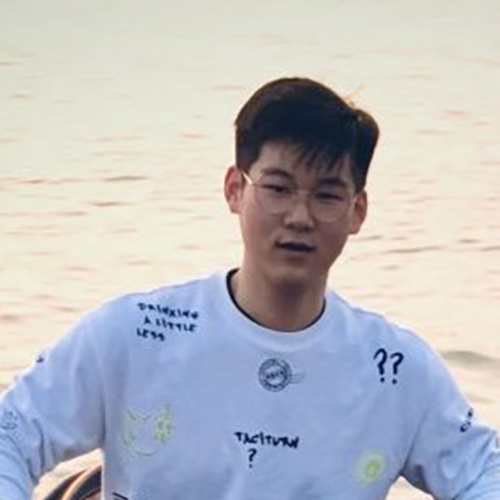
CHENG Xingkai
PhD Student
<h4>Research Inerests:</h4>
<ul>
<li>Ferromagnetic and antiferromagnetic Materials</li>
<li>First Principle Calculation</li>
<li>Topological Materials and Symmetry Analyzation</li>
</ul>
<h4>Education:</h4>
09/2021 – <strong>The Hong Kong University of Science and Technology
</strong>PhD’s Degree in Theoretical Physics
09/2017 – 09/2021 <strong>Beijing Institute of Technology
</strong>Bachelor’s Degree in Theoretical Physics
<h4>Introduction:</h4>
Mr. CHENG joined in Liu’s group in August, 2021. Before that he graduated and earned his bachelor degree from Beijing Institute of Technology. He is now a PhD Student in Liu’s group. Xingkai’s interests range from various magnetic materials like antiferromagtism and ferromagnetism, tological materials to symmetry analyzation. In daily life he loves sports like various balls-related activities such as tennis. You can connect him with xchengas at connect.ust.hk or in room 1001.
- Email: xchengas at connect.ust.hk